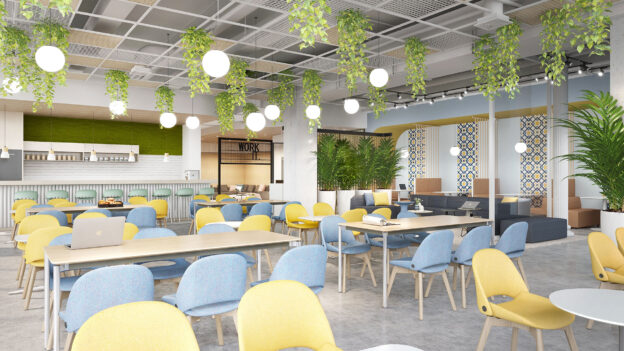
A corporate cafeteria is no longer just a place where employees grab lunch and head back to their desks. In a modern workplace, it can become a comfortable social space where people relax, connect with colleagues, recharge, and enjoy a break from their routine.
That is why cafeteria design deserves more thought than simply choosing tables, chairs, and attractive colours. A well-planned cafeteria should balance functionality, comfort, aesthetics, hygiene, and employee needs while fitting naturally into the overall workplace environment.
If you are planning a modern corporate cafeteria, here are some important factors to consider.
1. Understand How Employees Will Use the Space
Before starting the design, think about how the cafeteria will actually function during the day. Will employees mainly use it during lunch? Will some people have coffee meetings there? Could it also serve as an informal collaboration area?
Understanding these patterns helps determine the right layout, furniture, circulation space, and seating capacity.
A cafeteria designed around real employee behaviour will generally feel more practical than one designed purely for appearance.
2. Focus on Efficient Space Planning
Space planning is one of the most important aspects of cafeteria design. Employees should be able to move comfortably between the entrance, food counters, seating areas, beverage stations, and exit without creating unnecessary congestion.
The placement of tables and chairs should also leave sufficient walking space. Food service areas need to be positioned strategically so that queues do not interfere with people who are already seated.
An efficient layout can make even a compact cafeteria feel spacious and organised.
3. Create Different Seating Options
Not everyone uses a cafeteria in the same way. Some employees may prefer sitting with a large group, while others may want a quiet corner for a short break.
Consider incorporating a combination of:
- Individual seating
- Four- or six-person tables
- Communal tables
- Comfortable lounge seating
- High tables or counter seating
- Small informal meeting areas
Providing different seating choices makes the cafeteria more flexible and useful throughout the working day.
4. Choose Comfortable and Durable Furniture
Corporate cafeterias experience considerable daily use, so furniture needs to look good while also being durable and easy to maintain.
Chairs should provide reasonable comfort, while tables should be appropriately sized for the available space. Materials should be selected according to factors such as cleaning requirements, expected usage, and long-term durability.
The goal is not simply to purchase stylish furniture but to find options that can withstand everyday workplace activity.
5. Pay Attention to Lighting
Lighting can significantly influence the atmosphere of a cafeteria. Harsh lighting may make the space feel uncomfortable, while insufficient lighting can make it appear dull.
Where possible, make good use of natural light. Complement it with well-planned artificial lighting that provides sufficient brightness without creating glare.
Different areas can also benefit from different lighting approaches. For example, brighter lighting may work well around food counters, while softer lighting can create a more relaxed atmosphere in seating areas.
6. Make Hygiene and Cleanability a Priority
A cafeteria is naturally exposed to food spills, stains, moisture, and heavy foot traffic. Therefore, hygiene should be considered from the beginning of the design process rather than treated as an afterthought.
Flooring, wall finishes, countertops, tables, and other surfaces should be easy to clean and maintain. Waste-disposal points should also be conveniently positioned without disturbing the overall appearance of the space.
Good cafeteria design combines visual appeal with practical maintenance.
Key Elements to Keep in Mind
- Plan the layout around employee movement and peak-hour usage.
- Select materials that are durable, hygienic, and easy to maintain.
- Provide different seating arrangements for different employee needs.
- Use lighting, colours, and finishes to create a welcoming atmosphere.
- Integrate technology and utilities without compromising the overall design.
7. Use Colours and Materials Thoughtfully
Colours can influence how a cafeteria feels. Warm and welcoming tones can create a relaxed environment, while contemporary neutral shades can give the space a clean corporate appearance.
You do not necessarily need bright colours everywhere. Instead, consider using colours strategically through furniture, feature walls, upholstery, graphics, or decorative elements.
Materials can also help establish the desired character of the space. Wood finishes, textured surfaces, glass, metal, and other contemporary materials can be combined to create a modern yet comfortable environment.
8. Consider Acoustics
One commonly overlooked aspect of cafeteria design is noise management. Conversations, utensils, furniture movement, kitchen equipment, and large groups can quickly make a cafeteria noisy.
Acoustic ceilings, wall treatments, upholstered furniture, partitions, and other sound-absorbing elements can help create a more comfortable environment.
Good acoustics are particularly important when the cafeteria is also expected to function as an informal meeting or collaboration space.
9. Integrate Technology Where It Makes Sense
Modern corporate cafeterias can benefit from thoughtful technology integration. Depending on the organisation, this might include digital menu displays, cashless payment systems, charging points, Wi-Fi connectivity, smart ordering systems, or screens for announcements.
Technology should support the user experience rather than dominate the design. Well-integrated solutions can make everyday cafeteria operations smoother and more convenient.
10. Think about Sustainability
Sustainability is becoming an increasingly important part of workplace design. Cafeterias can contribute through energy-efficient lighting, responsible material selection, water-saving fixtures, waste-segregation systems, and energy-conscious kitchen equipment.
Reusable or recyclable materials and efficient waste-management practices can also help reduce the environmental impact of daily operations.
Even small design decisions can make a meaningful difference when the space is used by hundreds of employees every day.
11. Reflect the Company’s Brand and Culture
A corporate cafeteria does not have to look like a traditional canteen. It can become an extension of the company’s workplace identity.
Brand colours, subtle graphics, custom furniture, wall artwork, company values, or locally inspired design elements can give the cafeteria a distinct personality.
However, branding should feel natural. The space should still feel comfortable and inviting rather than like an oversized corporate advertisement.
12. Don’t Forget Ventilation and Odour Control
Good ventilation is essential in any cafeteria, particularly around food preparation and serving areas. Proper airflow helps manage heat, humidity, and cooking odours while contributing to a more comfortable indoor environment.
Kitchen exhaust systems and ventilation should therefore be planned alongside the architectural and interior design rather than added later.
13. Plan for Future Flexibility
Workplaces continue to evolve, and cafeteria requirements may change over time. A flexible design can make it easier to adapt the space for different uses.
Movable furniture, modular seating, multifunctional areas, and adaptable layouts can allow the cafeteria to accommodate employee events, informal meetings, celebrations, or changing workforce patterns.
Designing with future needs in mind can also reduce the need for expensive modifications later.
14. Balance Aesthetics with Functionality
An attractive cafeteria can certainly improve the workplace experience, but appearance should never come at the expense of usability.
A beautiful table that is difficult to clean, an attractive seating arrangement that creates congestion or decorative lighting that causes glare may look impressive initially but can become a daily inconvenience.
The strongest cafeteria designs find the right balance between visual appeal and practical performance.
Conclusion
Designing a modern corporate cafeteria is about creating more than a place to eat. It is about creating an environment where employees can comfortably take a break, interact with colleagues, recharge, and enjoy a positive workplace experience.
From space planning and seating to lighting, acoustics, hygiene, technology, sustainability, and branding, every element has a role to play. The best approach is to understand the organisation’s workforce and design the cafeteria around the way people actually use the space.
With thoughtful planning and the right design strategy, a corporate cafeteria can become one of the most engaging and valuable spaces within a modern office.