Category Archives: Corporate Office Furniture

Why Professional Corporate Office Design Matters for a Productive Workplace

A corporate office is more than a collection of desks, meeting rooms, and cabins. It is the place where people spend a significant part of their working day, interact with colleagues, meet clients, solve problems, and develop new ideas. That is why the way an office is designed can have a meaningful impact on the overall workplace experience.

A professional corporate office design brings together functionality, comfort, aesthetics, technology, and the organisation’s working culture. When these elements are planned thoughtfully, the office can become an environment that supports employees while also presenting a strong professional image to visitors and clients.

Corporate office design requires more than simply making a workplace look attractive. It involves understanding how people use the space and then creating an environment that supports different activities throughout the working day.

Employees may need quiet areas for focused work, collaborative spaces for teamwork, meeting rooms for discussions, informal areas for quick conversations, and comfortable spaces for breaks.

Professional designers consider these requirements while developing the overall layout, ensuring that different spaces work together rather than feeling disconnected.

One of the most important benefits of professional office design is effective space utilisation.

Poorly planned layouts can create unnecessary movement, crowded workstations, unused corners, and difficulties in communication. A well-planned layout considers employee numbers, departments, workflow, circulation, storage, meeting requirements, and future expansion.

Every square foot should have a purpose without making the office feel cramped.

Productivity is influenced by many factors, and the physical workplace is one of them.

A thoughtfully designed office can provide employees with suitable environments for different types of work. Quiet zones can support concentration, while collaborative spaces can encourage discussions and teamwork.

Good lighting, comfortable furniture, appropriate acoustics, and ergonomic workstations can also contribute to a more comfortable working environment.

  • Create a balance between collaborative areas and spaces for focused work.
  • Use ergonomic furniture to support everyday comfort.
  • Make natural and artificial lighting part of the design strategy.
  • Plan circulation paths to reduce unnecessary movement and interruptions.
  • Include flexible spaces that can adapt to changing workplace requirements.

Modern workplaces often require employees from different teams to communicate regularly. Office design can make these interactions easier by providing appropriate collaborative spaces.

Open discussion areas, informal meeting zones, brainstorming rooms, and shared workspaces can give employees alternatives to traditional meeting rooms.

However, collaboration does not mean removing every private space. A balanced office provides employees with choices depending on the nature of their work.

Employees are likely to spend several hours in the office every day, so comfort should be considered an essential part of design rather than an optional feature.

Ergonomic seating, suitable desk heights, adequate lighting, temperature control, acoustic planning, and comfortable breakout areas can all contribute to a better workplace environment.

Small details can make a noticeable difference to how people experience the office throughout the day.

Your office can also communicate something about your organisation to clients, business partners, candidates, and visitors.

Reception areas, meeting rooms, corridors, workspaces, and common areas can collectively reflect the company’s professional identity.

A consistent design language, thoughtful material selection, appropriate branding, and a clean layout can create a workplace that feels organised and purposeful.

Every organisation has its own working style. Some companies encourage collaboration and informal communication, while others require more private and focused environments.

Professional office design can translate these characteristics into the physical workplace.

For example, a company that values teamwork might incorporate more collaborative spaces, while an organisation that handles confidential work may require additional private rooms and controlled-access areas.

The objective is to make the workplace support the way the organisation actually operates.

Lighting has a major role in workplace design. An office that relies entirely on harsh artificial lighting can feel uncomfortable, while poorly lit workstations can affect visibility.

Where possible, natural daylight should be incorporated into the planning process. Artificial lighting should then complement it and provide appropriate illumination for different activities.

Meeting rooms, workstations, reception areas, corridors, and breakout spaces may each require different lighting considerations.

Noise can become a serious issue in busy offices, particularly when open-plan layouts are used.

Conversations, phone calls, meetings, movement, and equipment can create distractions. Professional design can address these issues through zoning, acoustic panels, partitions, sound-absorbing materials, and appropriate placement of noisy and quiet areas.

Good acoustic planning helps create a workplace where collaboration and concentration can coexist.

Technology is an essential part of modern business operations, so it should be considered during the design stage.

Workstations, meeting rooms, presentation areas, video-conferencing facilities, charging points, networking infrastructure, and access-control systems all require proper planning.

Integrating these requirements early can help avoid visible cables, awkward equipment placement, and expensive modifications later.

A workplace should not feel purely functional. Employees also benefit from spaces that allow them to step away from their screens and take a proper break.

Comfortable breakout areas, cafeterias, lounge spaces, greenery, natural light, and informal seating can help create a more welcoming environment.

The goal is not to turn an office into a recreational space but to provide employees with a healthy balance between focused work and short periods of relaxation.

Businesses change over time. Teams grow, departments move, working styles evolve, and technology develops.

A professional office design should therefore consider future requirements wherever possible. Modular furniture, flexible meeting spaces, adaptable layouts, and efficient infrastructure can make it easier to modify the workplace later.

Designing only for today’s requirements can sometimes result in costly changes when the organization expands.

Colours, materials, furniture, signage, lighting, and branding can work together to create a consistent visual identity.

However, branding does not have to mean placing a company logo everywhere. Subtle use of brand colors, graphics, materials, and design elements can create a professional environment without overwhelming the space.

The strongest corporate interiors often feel branded without appearing overly promotional.

Good design can also make everyday office operations smoother.

Storage should be located where it is needed, meeting rooms should be easy to access, service areas should be appropriately positioned, and circulation should be planned logically.

When employees can move through the workplace easily and find what they need, the physical environment becomes an asset rather than an obstacle.

It is easy to associate office design with attractive furniture, stylish walls, and impressive reception areas. While aesthetics matter, professional corporate design goes much deeper.

It combines space planning, functionality, ergonomics, technology, lighting, acoustics, branding, employee needs, and long-term practicality.

A visually impressive office that is uncomfortable or difficult to use will not deliver the same value as a space designed around real workplace requirements.

Professional corporate office design matters because the workplace has to serve people as well as business operations. It should support concentration, collaboration, communication, comfort, and the organisation’s identity.

From the initial space plan to furniture selection, lighting, acoustics, technology, and finishing details, every decision contributes to the overall workplace experience.

When design is approached strategically, a corporate office can become more than a functional workplace. It can become a space that employees are comfortable working in, clients can feel confident visiting, and businesses can adapt as they grow.
Why Every Corporate Office Needs a Design Expert behind It?

In today’s fast-paced business world, the design of your corporate office is no longer just about having four walls, desks, and chairs. It’s about creating an environment that reflects your brand, inspires your employees, and impresses your clients. And behind every high-functioning, visually appealing office is one key figure: a design expert.

1. First Impressions Are Everything

Your office space speaks volumes before you even say a word. A well-designed corporate space creates a powerful first impression. From the reception desk to the boardroom, a design expert ensures that every element aligns with your company’s personality and values.

2. Function Meets Aesthetics

A design expert understands how to strike the perfect balance between functionality and aesthetics. Whether it’s creating ergonomic workstations or selecting lighting that boosts productivity, they craft spaces that are both beautiful and efficient.

3. Boosting Employee Morale and Productivity

An uninspiring or poorly designed workplace can negatively impact employee mood and performance. On the other hand, thoughtfully designed office interiors can uplift spirits, encourage collaboration, and even reduce stress. Design experts use spatial planning, color psychology, and modern design trends to create workplaces where employees actually want to work.

4. Optimizing Every Square Foot

Especially in urban areas, space is a premium. A design expert can help you make the most of your available space, ensuring no square foot goes to waste. From storage solutions to open-plan layouts, they know how to create room to breathe – even in compact settings.

5. Consistency Across Brand and Space

Just like your logo and website, your office is a visual representation of your brand. A design expert helps translate brand elements into physical space – be it through color palettes, artwork, furniture, or signage – creating a consistent and memorable identity.

6. Future-Proofing Your Workspace

The way we work is constantly evolving. A design expert doesn’t just think about today – they design with flexibility for the future. Whether it’s accommodating hybrid work models or integrating technology seamlessly, they ensure your office adapts with ease.

Conclusion:
Hiring a design expert for your corporate office isn’t a luxury – it’s a strategic move. From enhancing productivity to leaving lasting impressions, their role goes far beyond decor. If you want your office to truly reflect the professionalism and vision of your business, make sure there’s a design expert behind it.

The Role of Experts in Corporate Office Design: How It Impacts Business Growth

A well-designed corporate office is more than just an aesthetic space; it plays a pivotal role in shaping company culture, employee productivity, and overall business success. Expert involvement in office design ensures a strategic approach that aligns with business objectives, enhances functionality, and creates an environment conducive to growth.

The Importance of Expert Office Design

Corporate office design is a specialized field that requires knowledge of architecture, ergonomics, technology integration, and corporate branding. Experts in office design bring a wealth of experience and understanding that can transform a workspace into a powerhouse of efficiency and innovation.

  1. Optimizing Space Utilization
    • Office design experts analyze floor plans and recommend layouts that maximize space efficiency while maintaining a comfortable working environment.
    • They ensure the proper allocation of workspaces, collaborative areas, and private zones, balancing functionality with aesthetics.
  2. Enhancing Employee Productivity and Well-being
    • Studies show that a well-designed office directly impacts employee satisfaction and productivity.
    • Experts incorporate natural lighting, ergonomic furniture, and noise control measures to improve comfort and reduce workplace stress.
    • Thoughtful design fosters a positive work atmosphere, leading to higher engagement and retention rates.
  3. Reflecting Brand Identity and Corporate Culture
    • The office environment should reflect a company’s values, mission, and brand personality.
    • Designers help integrate brand elements through color schemes, design motifs, and company storytelling within the workspace.
  4. Technology and Smart Office Integration
    • Experts ensure seamless incorporation of the latest technology to enhance efficiency, including smart lighting, automated climate control, and advanced security systems.
    • They plan for future tech adaptability, ensuring the office remains innovative and scalable.
  5. Sustainability and Cost Efficiency
    • Modern office design prioritizes sustainability through energy-efficient lighting, eco-friendly materials, and waste-reducing strategies.
    • Experts recommend designs that lower long-term operational costs while promoting environmental responsibility.

Impact on Business Growth

Investing in expert-led office design leads to tangible business benefits:

  • Increased Productivity: Employees perform better in a well-structured and inspiring workspace.
  • Better Employee Retention: A comfortable and engaging work environment helps in attracting and retaining top talent.
  • Enhanced Client Impressions: A well-designed office leaves a strong impression on clients and business partners, reinforcing trust and professionalism.
  • Improved Collaboration and Innovation: Open spaces, breakout rooms, and collaborative areas foster teamwork and idea-sharing.

Conclusion

The role of experts in corporate office design goes beyond aesthetics; it directly influences business efficiency, employee satisfaction, and overall growth. A strategically designed office creates a thriving environment where employees can perform at their best, ultimately driving business success. Companies that invest in professional office design gain a competitive edge by fostering innovation, enhancing productivity, and promoting a strong corporate identity.

What Makes a Great Corporate Office Designer in today’s Business World?

In today’s ever-evolving business world, the role of a corporate office designer has become more crucial than ever. Gone are the days when an office design was simply about placing desks and chairs in a room. Today, office design is about creating an environment that fosters creativity, collaboration, and productivity while aligning with a company’s culture and values. A great corporate office designer is someone who not only understands the technical aspects of design but also the human elements that make a workspace truly effective. Here’s what sets apart a great corporate office designer in the modern business landscape.

1. Understanding of Functionality and Efficiency

A great office designer knows that the primary function of an office space is to facilitate work. They have a keen understanding of the workflow, work dynamics, and space utilization. Whether it’s creating a layout that enhances movement between departments or ensuring the right balance of private and open spaces, a talented designer will optimize the use of space to maximize employee efficiency.

With businesses in places like Vadodara aiming to make the most out of limited office space, the designer’s ability to create functional layouts that cater to both individual tasks and collaborative efforts is paramount.

2. Emphasis on Employee Well-being

Modern office design isn’t just about aesthetics or brand alignment—it’s about creating a healthy environment for employees. A great designer takes into account factors like natural lighting, ventilation, ergonomic furniture, and the right balance between work and relaxation zones. They ensure that the design promotes mental and physical well-being, which, in turn, boosts productivity and job satisfaction.

In today’s world, where employee wellness is a priority for companies, a corporate office designer must be able to craft spaces that minimize stress, prevent burnout, and contribute to a sense of comfort and well-being.

3. Creativity and Innovation

The business world today is dynamic, and companies are looking for ways to stand out. A great corporate office designer is someone who brings creativity and innovation to the table. They look beyond conventional designs and challenge the status quo, creating offices that reflect a company’s unique culture and values.

From introducing unconventional materials to experimenting with vibrant colors or flexible furniture arrangements, these designers create workspaces that inspire creativity, promote collaboration, and help brands establish a strong identity. This level of creativity is particularly important for industries that thrive on innovation, such as tech companies and creative agencies.

4. Adaptability to Changing Needs

The nature of work is rapidly changing, especially with the rise of remote work and hybrid work models. A great corporate office designer must be adaptable, designing spaces that can evolve as the company grows and its needs change. This involves incorporating flexible office designs, modular furniture, and multi-purpose spaces that allow for quick adjustments.

Businesses in cities like Vadodara, where companies are expanding or evolving rapidly, require designers who understand how to design spaces that can easily be reconfigured to accommodate growth, technological advancements, or changes in team structures.

5. Sustainability and Environmental Responsibility

Sustainability is no longer a buzzword; it’s a necessity. Great corporate office designers are well-versed in sustainable design practices and materials, striving to minimize the environmental impact of their designs. From energy-efficient lighting to using recycled or eco-friendly materials, they ensure that the office space not only looks good but also contributes positively to the planet.

This commitment to sustainability is particularly important in today’s business world, where corporate social responsibility (CSR) is a key consideration for both employees and customers. Designers who are conscious of environmental issues can create spaces that align with a company’s sustainability goals and contribute to a greener future.

6. Understanding of Technology Integration

Technology is at the heart of modern business operations, and a great corporate office designer must have a strong understanding of how to integrate technology seamlessly into the office design. From high-speed internet connectivity to smart lighting systems and audio-visual setups for collaboration, technology must be woven into the fabric of the office space without disrupting the overall aesthetic.

As businesses adopt more advanced technologies like smart offices, remote working solutions, and virtual collaboration tools, corporate office designers need to ensure that these technologies are easily accessible and integrated into the design in a way that enhances productivity.

7. Collaboration with Clients and Stakeholders

A great office designer is not just a creator; they are also a collaborator. They understand that office design is not a one-size-fits-all solution, and each company has its own unique needs and challenges. A skilled designer works closely with clients to understand their goals, values, and culture, as well as the specific needs of the business and its employees.

Effective communication is key in this process, as the designer needs to translate the client’s vision into a functional and aesthetically pleasing design. This collaboration ensures that the final design truly reflects the company’s identity and fosters a positive work environment.

8. Attention to Detail

Finally, great office designers possess an exceptional eye for detail. It’s often the small touches—the right lighting fixture, a well-chosen piece of artwork, or the perfect color palette—that elevate an office design from good to great. These details contribute to the overall ambiance of the space and create a cohesive and professional environment that employees and visitors can appreciate.

Whether it’s the ergonomics of a chair or the acoustics of a meeting room, every detail matters in ensuring the office space is comfortable, functional, and aesthetically pleasing.

Conclusion

In today’s fast-paced and competitive business world, the role of a corporate office designer has evolved beyond mere decoration. A great designer is a strategic partner who understands the importance of creating a workspace that not only aligns with a company’s brand and values but also enhances employee well-being, fosters collaboration, and integrates seamlessly with technology. As businesses continue to embrace change, the need for adaptable, creative, and sustainable office designs will only grow.

For companies in Vadodara and beyond, finding the right corporate office designer who can deliver on these expectations is essential for creating workspaces that are not just functional but inspiring and conducive to success.

Why Corporate Office Design Matters: Enhancing Productivity and Morale

In the corporate world, the design of an office is more than just an aesthetic choice—it’s a strategic tool that can significantly impact employee productivity and morale. A well-designed office environment can inspire creativity, foster collaboration, and contribute to overall job satisfaction. Here’s why corporate office design matters and how it can enhance both productivity and morale.

The design of your corporate office is often the first thing clients, visitors, and potential employees notice when they enter your space. A thoughtfully designed office reflects your company’s values, culture, and professionalism. This first impression can influence how others perceive your brand and can play a crucial role in attracting top talent and building strong client relationships. An inviting, modern, and well-organized office signals that your company is forward-thinking and values its employees and clients.

The physical environment has a direct impact on how employees work. An office designed with productivity in mind can help employees focus, reduce distractions, and improve overall efficiency. Key design elements that boost productivity include:

  • Ergonomic Furniture: Providing comfortable, supportive furniture reduces strain and fatigue, enabling employees to work more effectively over longer periods.
  • Natural Light: Access to natural light has been shown to improve mood and energy levels, leading to better focus and productivity. Large windows, skylights, and glass partitions can help maximize natural light in the office.
  • Noise Management: Open-plan offices are popular but can be noisy. Incorporating acoustic panels, quiet zones, or soundproof meeting rooms can help manage noise levels and allow for concentration when needed.
  • Flexible Spaces: Providing a variety of workspaces—such as quiet zones for focused work, collaborative areas for teamwork, and comfortable break rooms—allows employees to choose the best environment for their tasks, boosting productivity.

A well-designed office isn’t just about productivity; it also plays a crucial role in employee well-being and morale. Employees who are comfortable and happy in their work environment are more likely to feel valued and motivated. Here’s how office design can enhance morale:

  • Comfortable and Inviting Spaces: Creating a workplace that feels comfortable and welcoming can make employees feel at home. Incorporating elements like cozy seating, greenery, and personal touches can make the office a place where employees want to spend their time.
  • Collaborative Areas: Designated areas for collaboration encourage teamwork and social interaction, which can improve morale. When employees have spaces to brainstorm and share ideas, it fosters a sense of community and belonging.
  • Personalization: Allowing employees to personalize their workspaces with photos, plants, or other items can make them feel more connected to their environment. This sense of ownership can lead to greater job satisfaction and pride in their work.
  • Health and Wellness: Incorporating wellness features such as standing desks, fitness rooms, or relaxation areas shows employees that their health and well-being are a priority. A healthy work environment can reduce stress and increase overall happiness.

Office design is a powerful way to communicate and reinforce your company’s culture. Whether your company values innovation, collaboration, or sustainability, the design of your office should reflect these principles. For example:

  • Innovation: If your company prides itself on being innovative, an office with cutting-edge technology, open spaces for brainstorming, and creative decor can reinforce this identity.
  • Collaboration: A culture of collaboration can be supported by open-plan layouts, communal tables, and casual meeting areas that encourage spontaneous interactions.
  • Sustainability: For companies focused on sustainability, eco-friendly materials, energy-efficient lighting, and a focus on natural elements like plants can demonstrate a commitment to the environment.

In today’s competitive job market, the design of your office can be a significant factor in attracting and retaining top talent. Potential employees often consider the work environment when deciding whether to join a company. A modern, well-designed office that promotes work-life balance, comfort, and flexibility can be a major selling point. Furthermore, a positive and inspiring work environment can reduce turnover by making employees feel more satisfied and engaged in their roles.

Conclusion

Corporate office design is much more than just an aesthetic concern; it’s a crucial factor in shaping employee productivity, morale, and overall company success. By investing in a well-designed office that reflects your company’s values, supports employee well-being, and fosters a positive work environment, you can create a space that not only impresses clients but also empowers your team to perform at their best. Whether you’re redesigning an existing space or planning a new office, thoughtful design choices can have a lasting impact on your company’s culture, productivity, and growth.

Front and Center: The Impact of Reception Furniture on Office Atmosphere

When you step into an office, what’s the first thing that catches your eye? Is it the vibrant buzz of productivity, the sleek lines of modern architecture, or perhaps the inviting warmth of the reception area? While all these elements contribute to the overall feel of an office, there’s an often-overlooked hero in setting the tone: reception furniture. This seemingly minor detail plays a pivotal role in creating a lasting first impression and influencing the office atmosphere.

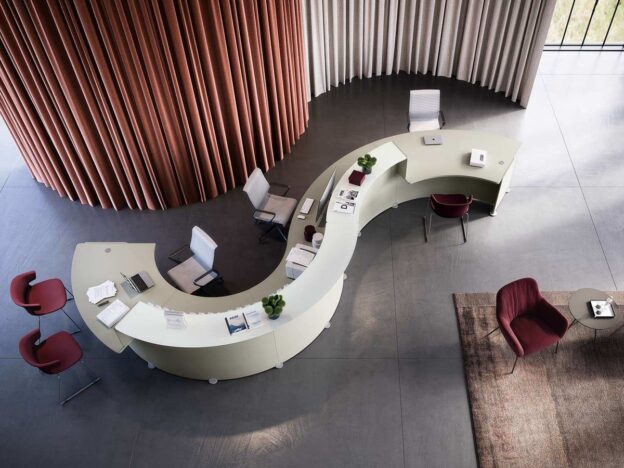
In business, first impressions are critical. The reception area serves as the face of the company, providing the first physical interaction for clients, partners, and potential employees. It’s here that reception furniture steps into the spotlight. A well-designed reception desk, comfortable seating, and thoughtful decor communicate volumes about a company’s values and culture. Are you greeted by a sleek, minimalist desk paired with contemporary seating, suggesting innovation and forward-thinking? Or perhaps a plush, traditional arrangement that exudes stability and professionalism?

Reception furniture is more than just aesthetics. Comfort is key. After all, guests may spend several minutes waiting, and those minutes can shape their perception of your business. Ergonomically designed chairs with adequate support, complemented by a welcoming ambiance, show that the company values its visitors’ comfort and well-being.

Consider the placement and variety of seating. A mix of single chairs and communal sofas can cater to different preferences, making the space feel inclusive. Thoughtful touches, such as easily accessible charging stations and coffee tables with current magazines, can enhance the experience, making guests feel considered and at ease.

Reception furniture also offers a unique opportunity to reinforce your brand identity. Custom-designed furniture featuring company colors, logos, or motifs can subtly reiterate your brand’s message. For instance, a tech startup might choose sleek, modular furniture to reflect its cutting-edge nature, while a law firm might opt for more classic, robust pieces to signify reliability and tradition.

The psychology of space is a fascinating field that shows how our environment influences our mood and behavior. Reception areas are no exception. A cluttered, uncomfortable, or poorly lit reception area can subconsciously induce stress or impatience in visitors. Conversely, a well-organized, aesthetically pleasing space can promote calmness and positivity. Natural light, plants, and artwork can further enhance this effect, creating a serene environment that sets a positive tone for any interaction that follows.

Beyond aesthetics and comfort, reception furniture must be practical and functional. Durability is crucial, as this area experiences high traffic. Easy-to-clean materials ensure that the space remains pristine and inviting despite heavy use. Additionally, the layout should allow for easy navigation and accessibility, ensuring a seamless experience for all visitors, including those with disabilities.

Finally, the reception area, and by extension, its furniture, is a reflection of company culture. An open, inviting space with casual seating can convey a relaxed, innovative atmosphere. In contrast, a more formal, structured setup might reflect a company that values tradition and formality. By aligning the reception area with the broader office culture, companies can create a cohesive and authentic first impression.

Reception furniture is far more than an afterthought in office design. It’s a critical element that shapes first impressions, reflects brand identity, and influences the overall atmosphere of an office. By investing in thoughtful, well-designed reception furniture, businesses can create a welcoming, professional, and memorable experience for every visitor who walks through their doors. Remember, in the art of making first impressions, the furniture is front and center.

Elevate Your Workspace: Exploring the Latest Corporate Office Cabin Furniture Trends

In today’s rapidly evolving corporate landscape, the office cabin serves as a sanctuary of focus and productivity for executives and professionals alike. As the demands of the modern workplace continue to evolve, so too does the design of office cabin furniture. From ergonomic innovations to aesthetic trends, staying abreast of the latest developments is essential in creating a workspace that inspires creativity, fosters collaboration, and enhances well-being. Join us as we delve into the cutting-edge trends shaping corporate office cabin furniture design and discover how you can elevate your workspace to new heights.

In an era where employee well-being takes center stage, ergonomic office furniture has become non-negotiable. Office cabin furniture now prioritizes comfort and support, with adjustable desks, ergonomic chairs, and customizable workstations designed to promote healthy posture and reduce strain. Look for ergonomic solutions that cater to individual needs, from height-adjustable desks to lumbar-supporting chairs, ensuring a workspace that prioritizes both productivity and employee health.

Flexibility is the hallmark of modern office design, and modular furniture solutions are leading the charge. Office cabins are no longer confined by static layouts but rather embrace adaptability and versatility. Modular cabin furniture allows for easy reconfiguration, enabling executives to customize their workspace according to evolving needs. From modular desks with integrated storage solutions to flexible seating arrangements, embrace the freedom of modular design to create a cabin that evolves with your workflow.

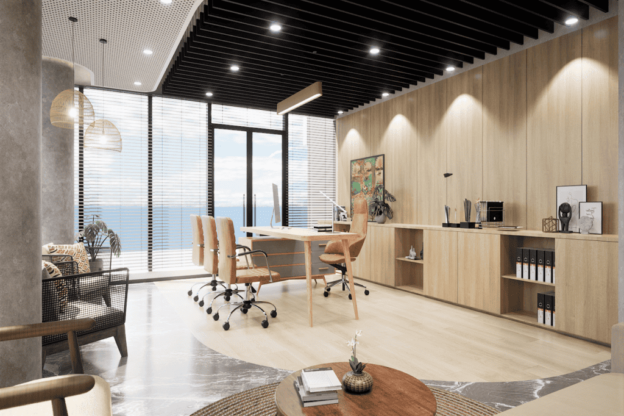
Corporate office cabins are shedding their traditional, austere aesthetic in favor of sleek and sophisticated designs. Clean lines, minimalist finishes, and contemporary materials define the latest trends in cabin furniture, creating a space that exudes professionalism and modernity. Opt for furniture pieces with sleek metal accents, glass surfaces, and high-gloss finishes to add a touch of sophistication to your office cabin while maintaining a clean and clutter-free environment.

In the age of digital transformation, office cabin furniture is embracing technology like never before. From integrated charging stations to built-in connectivity options, tech-integrated solutions are revolutionizing the modern workspace. Explore office cabin furniture with discreet cable management systems, wireless charging capabilities, and integrated USB ports, ensuring seamless connectivity and enhanced productivity for today’s tech-savvy professionals.

Incorporating elements of nature into office cabin design has been shown to improve employee well-being, boost creativity, and increase productivity. Biophilic design principles are gaining traction in corporate office cabin furniture, with a focus on natural materials, greenery, and natural light. Integrate wooden accents, potted plants, and large windows into your cabin design to create a space that feels warm, inviting, and connected to the natural world.

Conclusion:

The corporate office cabin is more than just a workspace—it’s a reflection of your organization’s values, culture, and commitment to excellence. By embracing the latest trends in office cabin furniture design, you can create a workspace that inspires innovation, promotes well-being, and enhances productivity. From ergonomic excellence to modular mastery, from sleek sophistication to tech-integrated solutions, the possibilities are endless in elevating your workspace to new heights and empowering executives to thrive in the modern corporate landscape.

COMMON SPACES IN THE OFFICE: WHICH ONES ARE ESSENTIAL?

Modern offices have very different needs to those of a few years ago, and it is that not only have the ways of working and the strategies changed to be competitive; Covid-19 and the popularization of hybrid work are also transforming workspaces.

Having a creative team, generating engagement and promoting lateral thinking were already enough reasons to bet on common spaces in the office. Now that semi-presence has become the most common in companies, common spaces are even more necessary than before to respond to the true needs of employees.

In this article we are going to see what common spaces should not be missing in your office, why you should have them in your design and what function they should fulfill.

COLLABORATION AND TEAMWORK AREAS

Face-to-face work in the office will increasingly be focused on sharing, collaboration, coordination, and all those tasks that are more complex to perform through teleworking.

Meeting rooms, which have always been important, now acquire a greater prominence, and a more intensive use. The ideal is to have several common areas where it is easy to collaborate, although it is not always necessary that they be completely separate rooms. The dividing elements with plants or sound-absorbing furniture are a great option, which also allows a quick reconfiguration of the spaces to adapt them to the different needs of each moment.

LEARNING AND TRAINING AREAS

Training, meetings with the entire staff, meetings, holding events… these are needs that will become more and more frequent. We are in a time of profound changes in which maintaining cohesion and coherence is one of the main challenges. For this, it is necessary to have adequate spaces within the offices.

A spacious and versatile space, which can be used both for training and for conferences and company events, is now much more useful than individual offices.

INFORMAL MEETING AREAS

Have a coffee, eat something in the middle of the morning, talk in a relaxed way with colleagues, exchange opinions … Socialize! Although it may seem contradictory, spaces for socialization and relaxation at work not only increase productivity, but also its quality.

Human beings are social by nature, and it is in those moments that we learn more fluidly from each other, we accompany each other in challenges, we avoid making mistakes that others have suffered, we generate camaraderie, and, ultimately, we multiply our intelligence to carry out the work in the best possible way thanks to the exchange.

RELAXATION AREAS

A small relaxation area in which to be able to disconnect in order to connect with more enthusiasm is the best investment you can make for your employees. Not only will your productivity increase, you will also be able to retain talent and generate commitment to your company.

TIPS FOR ORGANIZING A SMALL OFFICE

TIPS FOR ORGANIZING A SMALL OFFICE

Organizing a small office is essential to make the most of your space, maintain balance and order and create a good work environment that promotes productivity. We must prioritize the organization of the material with which we work, especially when it comes to documents. Keep in mind that we will need specific storage furniture and this will also occupy part of the space we have.

Today we tell you how to organize a small office

5 tips to organize a small office

GIVE PRIORITY TO MULTIFUNCTIONAL FURNITURE

In the case of organizing the space inside a small office we must bear in mind that the more furniture we use, the less free space we will be leaving. A room intended for work needs to breathe, and we must be smart when selecting office furniture to organize a small office.

We are going to need tables and office chairs and also furniture for storage. To make the most of the space we can resort to shelves attached to the walls, especially placed in the highest part. Reduce the decorative elements to the minimalist to recharge the stay is important, but it is not necessary to eliminate them completely.

TIPS FOR ORGANIZING A SMALL OFFICE

DIVIDE THE SPACE WITHOUT LOSING AMPLITUDE

On many occasions, in the office we will need to create different environments to develop diverse activities, either with clients or for general meetings. For this the best thing is to use dividing panels that occupy the minimum space and that we can remove them at any time. Japanese panels can be perfect for this function, they bring elegance and functionality.

We can also use screens, curtains, sliding doors or any other element that we can easily remove to recover the space again.

COAT RACKS AND ORGANIZERS OF CLOTHES AND ACCESSORIES

When it comes to organizing a small office, we cannot forget the section on workers’ clothing. It is important to have a place to store coats and bags or backpacks. Placing a zone with a coat rack and a shelf at the entrance of the office will help to make the workspace more orderly. In this way, office workers can leave their warm clothes and their bags or backpacks at the entrance without interfering in the back of the chair.

TIPS FOR ORGANIZING A SMALL OFFICE

ORDERED CABLES

In an office many electronic devices are used, starting with computers, printers, photocopiers, projectors and others, depending on the activity performed in the office. For this the best thing is to have the professionalism of an electrician who arranges the wiring in a way that does not hinder when moving from one side to another. Not having the cables in view, above the tables or from one side of the floor to the other will avoid the sensation of disorder.

THE ARRANGEMENT OF TABLES

If we have to place several tables for the workers in the office, it is best to arrange them at the same address. The straight lines bring order and tranquility to the decoration of a room.

We must ensure that all tables are oriented in the same direction to achieve a relaxed atmosphere.

Keep the tables collected and with a minimalist decoration is also essential to organize a small office and get a sense of spaciousness.

Modern Office Interior Designers Surat

Office Interior Furniture Designer Surat

Office Interior Furniture Surat

We specialize in manufacturing and supplying a durable and stylish range of Office Interior Furniture. Extensively demanded in various commercial sectors, the offered furniture is manufactured using premium quality basic material in line with sophisticated technology. Further, we provide this furniture in varied designs and shapes to suit with clients’ specific requirements. We provide our designer furniture at market leading prices to our clients.

Our Office Interior furniture material are provided to the clients as a whole package, which includes table, chairs and side tables among others. We hold expertise in overcoming the challenges in refurbishing an office and create the ideal look of the premises which reflects professionalism and class.

Why Choose us for Office Interior Furniture Design in Surat?

By keeping track of the ongoing market development, we are engaged in offering a wide array of Office Interior Furniture to our valuable customers. Apart from this, the offered range of products can be availed from us at pocket friendly prices. These products are tested on various parameters to ensure durability and flawlessness. The products offered by us are widely famous for their attributes like high abrasive resisting, high strength, and water resisting and termite proof.

Features:

  • Highly used
  • Sturdy construction
  • Fine finish

Corporate Office Interior Designers Surat Modern Office Furniture Surat Modern Office Interior Designers Surat Office Furniture Surat Office Interior Designers Surat Reception Desk Furniture Surat Reception Furniture Designers Surat